
William Blake's Paper Boat...

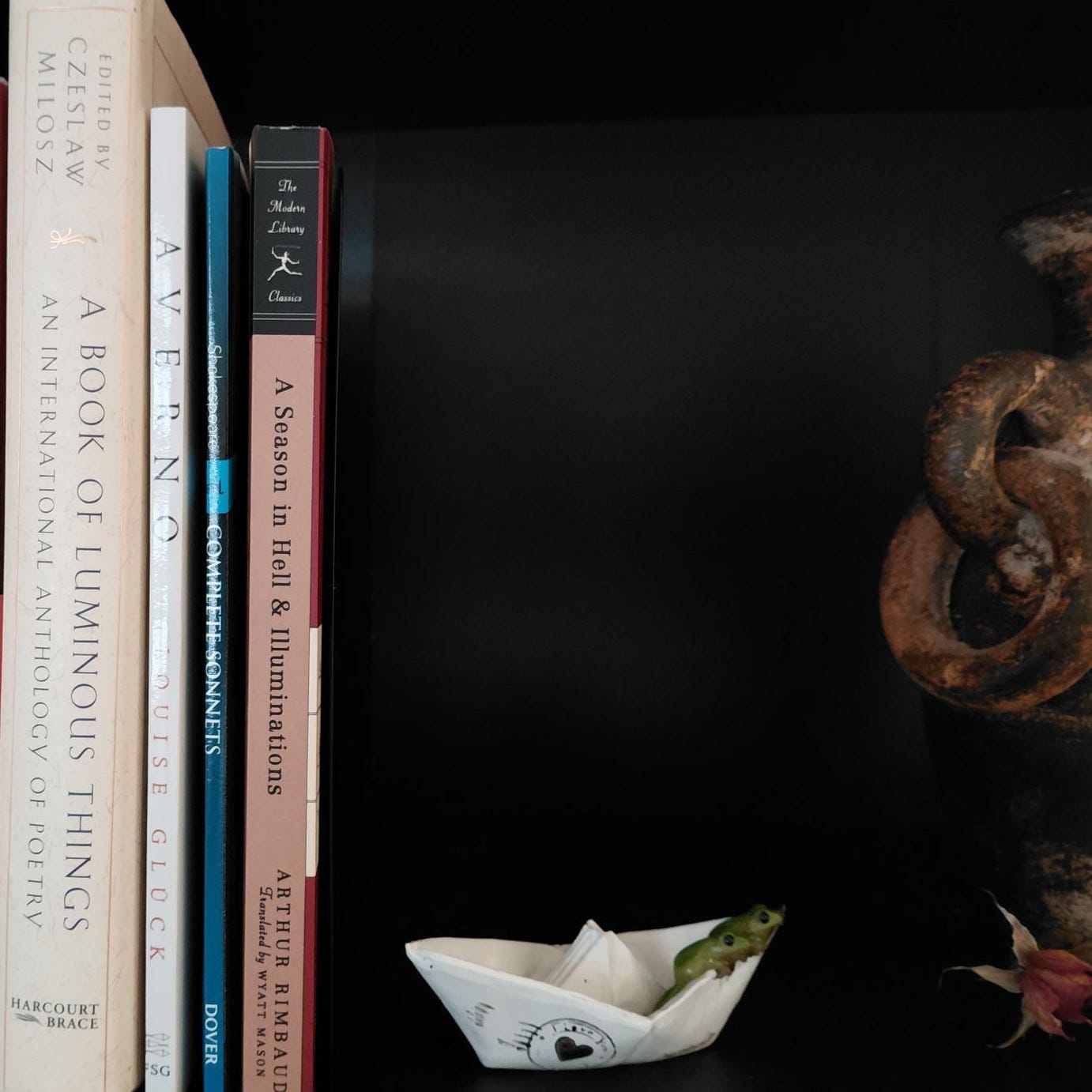
Whenever I'm speaking with someone who isn't accustomed to connecting with abstract, minimalist, or symbolic art, I often point them toward William Blake's poem “Auguries of Innocence.” Blake uses simple, everyday imagery to express ideas that are vast, emotional, and metaphysical. His poem demonstrates how a small physical object or reference can open into a much larger meaning. This is precisely the kind of seeing that less literal art asks of us. It invites another mode of perception.
The idea of seeing heaven in a wildflower, for instance, offers a way of understanding different kinds of sight. For strict admirers of realism, the challenge is often learning to see beyond the literal image. It requires seeing from the inside, as it were. In this way, abstract or symbolic art becomes self-evident. Singular or reduced forms reveal that simplification is not the result of having less to say. Rather, it is an attempt to say more with less.
The goal is maximum impact through the smallest amount of physical information necessary to evoke an idea, feeling, or experience. It is a form of compression. A concentrate.
The art emerges when that compression becomes powerful, striking, beautiful, or deeply expressive. In that moment, process and emotion work together to reveal the heavenly space within the mortal one. We are moved inwardly by something that arrives through the vessel of physical form.
This idea lies at the heart of my paper boat series, in its emotional sense. The poem that inspired the work embodies this principle. The gentle glide and airy movement of a fragile paper boat becomes a symbol for the movement of the heart and soul. The boat itself is simple, but what it carries is immense.
Original blog posted in my website: HERE.
Masterfully put into words, D 🫶🏻✨⛵️❤️
love william blake. His etching technique revolutionary.